



What Is an Elongated Cushion Diamond? Your Ultimate Guide to This Unique Cut
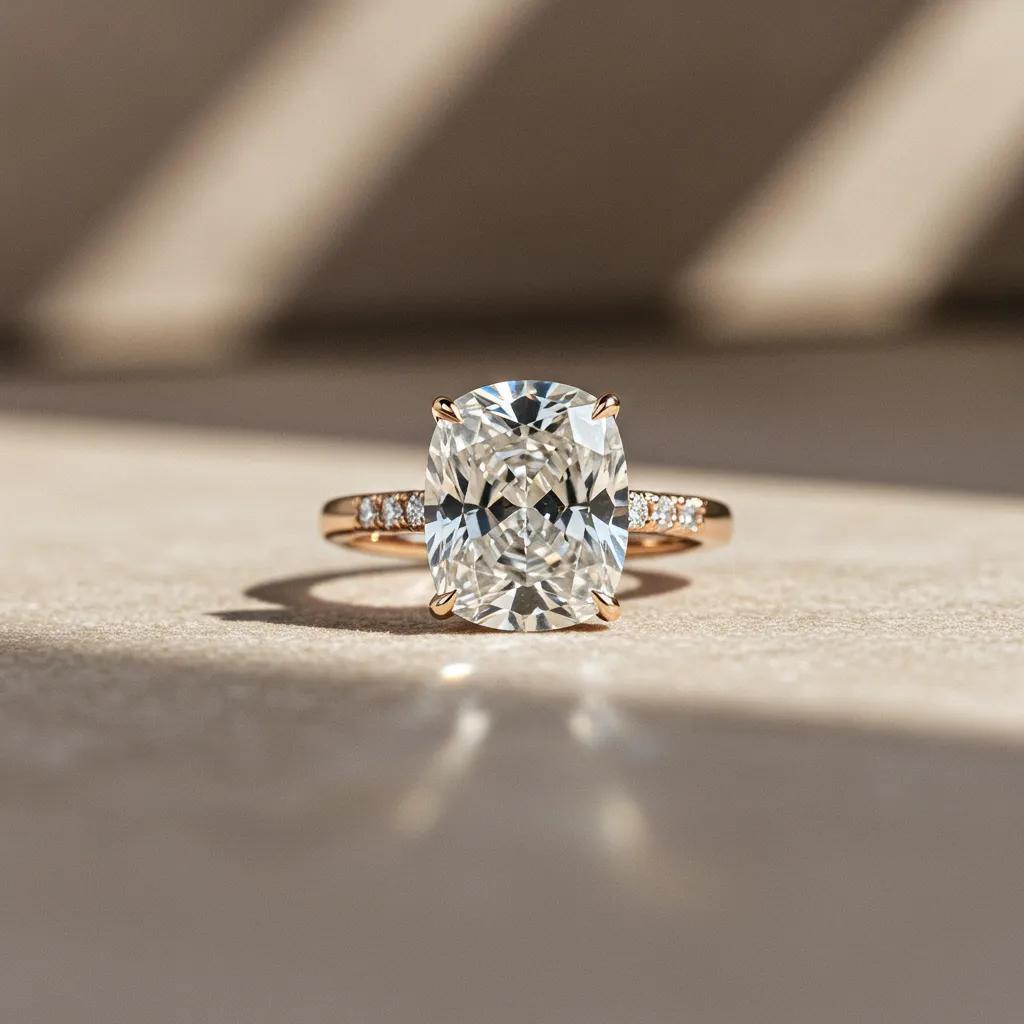
An elongated cushion diamond is a rectangular-to-slightly-rectangular variation of the traditional cushion cut that pairs rounded corners with a softer, pillow-like silhouette to produce an elegant, lengthened face-up appearance. This guide explains how length-to-width ratio, faceting style, and setting choices combine to create the elongated cushion’s distinctive look, why it often flatters the finger more than other shapes, and how these factors influence brilliance, perceived size, and durability. Many buyers want a shape that reads vintage and modern at once while maximizing visual spread; the elongated cushion answers that need by blending classic cushion faceting with a stretched silhouette. Below you’ll find detailed definitions, ratio guidance, faceting comparisons (crushed ice vs. brilliant), head-to-head comparisons with oval and radiant cuts, a note on celebrity influence like Taylor Swift’s ring, practical 4 Cs advice tailored to elongated cushions, and local purchasing options including custom build and 1-on-1 consultations. Read on to learn technical specifics and clear, actionable buying steps so you can evaluate elongated cushion diamonds confidently.
 What Defines an Elongated Cushion Cut Diamond?
An elongated cushion cut diamond is defined by three core attributes: a length-to-width ratio that leans beyond the classic cushion’s near-square proportions, rounded corners rather than clipped or sharp corners, and faceting that can vary between crushed-ice or brilliant styles to influence sparkle and apparent depth. These structural traits change how light returns to the eye and how the stone sits on a finger, making the cut visually distinct from rectangular step cuts and oval shapes. Understanding these defining traits helps buyers choose the exact look they want—from subtly elongated and balanced to distinctly rectangular and dramatic—while ensuring settings protect the rounded corners. The following subsections break down ratio ranges, faceting comparisons, and corner geometry so you can match physical proportions to your aesthetic goals.
What Is the Length-to-Width Ratio for Elongated Cushion Diamonds?
The length-to-width ratio for elongated cushion diamonds typically ranges from about 1.10–1.50, with visual effects shifting as the ratio increases: lower values read nearly square while higher values appear distinctly rectangular. A balanced elongated cushion often falls between 1.15–1.25 for those who want subtle elongation without appearing too long, whereas 1.25–1.50 suits buyers who prefer a pronounced, slim silhouette. Choosing a ratio directly affects finger coverage and the slimming optical effect—longer ratios visually lengthen the finger while shorter ratios emphasize cushion character. Consider trying on samples across this numeric range in person to see how proportions relate to finger shape, and compare how different settings frame the stone before making a final selection.
Introductory table: common length-to-width ranges and their visual effect.
| Ratio Range | Visual Description | Recommended Use |
|---|---|---|
| 1.10–1.15 | Slightly rectangular; retains cushion balance | Classic cushion look with modest elongation |
| 1.15–1.25 | Noticeably elongated but still balanced | Best for slimming the finger without dramatic length |
| 1.25–1.50 | Clearly rectangular; elongated silhouette | For strong slimming effect and modern rectangular aesthetic |
This ratio table clarifies how numeric ranges translate to on-hand appearance and helps you pick a ratio that matches both aesthetic preference and finger proportions.
How Do Faceting Styles Differ: Crushed Ice vs. Brilliant?
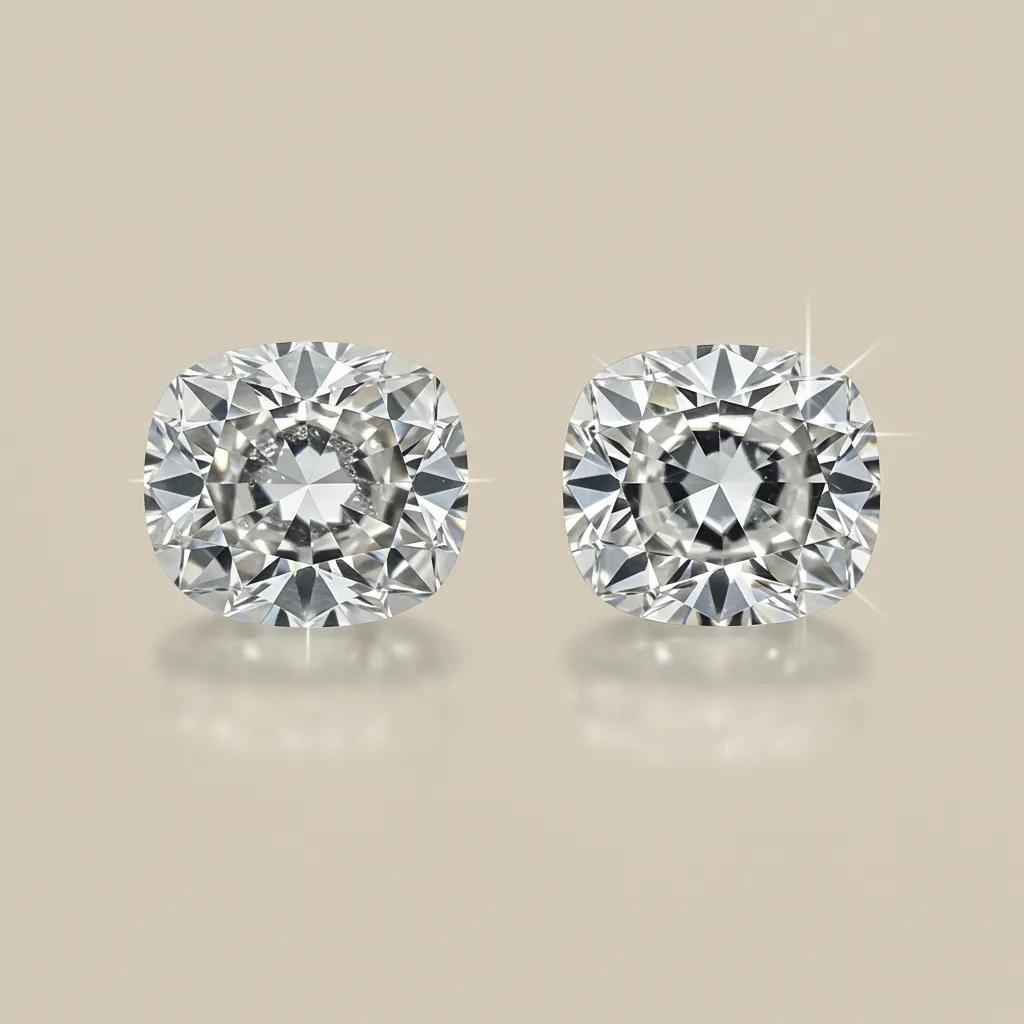
Faceting style is a major determinant of an elongated cushion’s personality: crushed-ice faceting yields many small, fragmented flashes for a soft, vintage shimmer, while brilliant-style faceting uses larger facets that produce bold sparkle and distinct fire. Crushed-ice patterns tend to hide inclusions better and support a more antique, diffuse look; brilliant faceting prioritizes scintillation and crisp light return, making the stone read brighter in many lighting conditions. Buyers should match faceting to lifestyle and priorities—choose crushed ice if you favor a romantic, textured sheen and brilliant faceting if you want lively sparkle and maximum face-up brightness. The table below summarizes the primary differences to make a quick, practical comparison.
Faceting comparison table: crushed ice vs. brilliant for elongated cushions.
| Faceting Style | Light Performance | Best Use-case |
|---|---|---|
| Crushed Ice | Fragmented, soft flashes; vintage shimmer | Hides inclusions; suits antique or halo settings |
| Brilliant | Distinct scintillation and fire; bold sparkle | Maximizes brightness; excels in solitaire or open settings |
| Hybrid/Modern Cushion | Balanced dispersion and sparkle | Best for buyers seeking both vintage texture and modern fire |
This faceting table highlights why faceting choice affects perceived clarity and final styling options, and it helps you weigh trade-offs between appearance and performance.
What Are the Signature Rounded Corners and Rectangular Shape?
Rounded corners are a signature feature of the elongated cushion, providing a softer profile and improved corner durability compared with sharp-cornered rectangular cuts like radiant or emerald. Those rounded corners reduce the chance of chipping and allow for secure prong or bezel protection while also smoothing the optical transition from stone to band. Visually, the rounded corners keep the cushion’s pillow-like character even as the length increases, differentiating elongated cushions from the harder geometry of step cuts. When selecting a mounting, ensure the setting style complements corner shape—settings that cradle and protect rounded corners both preserve stone integrity and enhance the cut’s classic silhouette.
Why Choose an Elongated Cushion Diamond? Benefits and Unique Appeal
An elongated cushion diamond offers multiple buyer-centric benefits: it flatters fingers through elongation, often appears larger face-up relative to its carat weight, and fuses vintage cushion charm with modern, streamlined proportions for a versatile engagement aesthetic. These advantages stem from a combination of ratio, faceting, and table/depth relationships that together influence face-up spread, light performance, and perceived proportions. Many couples select elongated cushions when they want a ring that reads both timeless and contemporary—perfect for those seeking something distinct from rounds and ovals while retaining cushion warmth. The subsections below explain the slimming illusion, perceived size dynamics, and the cut’s vintage-meets-modern appeal so you can judge whether the cut fits your design goals.
- Slimming Effect: The length visually lengthens the finger, creating an elegant silhouette.
- Perceived Size: Wider tables and shallower depths often make the face-up look larger than the carat weight suggests.
- Versatile Style: Rounded corners and varied faceting blend vintage charm with contemporary lines.
These benefits make elongated cushions a compelling choice for buyers who want a balance of presence, elegance, and distinctiveness; next we’ll examine precisely how the cut creates those slimming and sizing effects.
How Does the Elongated Cushion Cut Create a Slimming Effect on the Finger?
The elongated cushion cut creates a slimming effect by shifting the visual centerline along the finger—length-to-width ratios above 1.15 draw the eye vertically, which lengthens finger appearance and adds perceived elegance. Band width and setting profile also influence this illusion: narrower, low-profile bands enhance elongation while wider bands reduce it, so pairing the right band to the chosen ratio is critical. Settings such as solitaires or tapered diamond shoulders amplify the lengthening effect, whereas heavy bezels can shorten perceived length. Try combinations in person to see how ring architecture and ratio interact, and bring photos or sample fingers to one-on-one viewings to finalize proportion choices.
Does the Elongated Cushion Diamond Appear Larger Than Its Carat Weight?
Elongated cushion diamonds frequently appear larger face-up than their carat weight might suggest because stretched dimensions increase visible surface area; table size and shallower depths boost this effect. A stone with ideal table-to-depth proportions will maximize spread without sacrificing light return, so evaluating table percentage and depth alongside ratio is essential for perceived size. Compared to rounds, elongated cushions can present more face-up area for the same carat weight, while ovals may achieve similar spread but with different brilliance patterns. When comparing stones, always view face-up photos and in-person samples to judge how cut proportions influence perceived size and sparkle.
What Combines Vintage Charm with Modern Elegance in This Cut?
The elongated cushion’s lineage traces back to old-mine and early cushion types—historical faceting that produced soft, romantic flashes—while modern faceting techniques have introduced precise pavilion angles and polishing that increase light return. This fusion means that buyers get a piece that reads as heirloom-inspired yet benefits from contemporary cut symmetry and finishing standards. Hybrid faceting patterns now offer options that lean vintage (crushed-ice) or modern (brilliant), and metal choices further define the character: warm gold enhances vintage mood, while platinum and white gold emphasize modern contrast. This blend appeals to couples who want a ring with storytelling depth and contemporary performance.
After outlining benefits and stylistic forces, consider how local jewelers translate these attributes into a finished ring that matches your priorities.
San Jose Jewelers can help translate elongated cushion benefits into a tailored engagement ring through personalized consultations and custom builds. As a Waco, TX showroom specializing in custom bridal jewelry and engagement rings, they emphasize handcrafted pieces, ethical sourcing, and a warranty that supports long-term ownership. For buyers seeking to match a specific ratio, faceting style, or vintage-modern balance, their one-on-one consultation and build-your-own engagement ring service allow hands-on selection of stone proportions and settings. If you want in-person guidance that connects the technical choices above to a finished design, a consultation can align your aesthetic and practical priorities.
How Does the Elongated Cushion Diamond Compare to Other Popular Cuts?
Comparing the elongated cushion to oval, radiant, and traditional cushion cuts clarifies trade-offs in brilliance, silhouette, and corner protection—critical factors when choosing a shape that fits lifestyle and style goals. Each sibling entity offers distinct visual and practical attributes: oval emphasizes length with continuous curves, radiant blends brilliant faceting with clipped corners for angularity, and traditional cushion remains squarer with classic pillow proportions. Understanding these differences helps buyers choose the shape that best matches desired light performance, finger coverage, and setting compatibility. The subsections below provide focused comparisons and buyer profiles for each shape to make direct selection easier.
Here are three key comparative factors to consider when choosing between shapes:
- Visual silhouette and finger coverage
- Faceting pattern and light return
- Corner geometry and setting protection
These comparison axes clarify when an elongated cushion is preferable versus alternatives.
What Are the Key Differences Between Elongated Cushion and Oval Diamonds?
Elongated cushions differ from oval diamonds mainly in faceting and edge softness: cushions have rounded corners and faceting that can emphasize a pillow-like texture, while ovals have continuous curves and a different brilliance pattern that often appears more uniform. Ovals can demonstrate a bow-tie effect depending on proportions, whereas elongated cushions’ faceting choices influence how much bow-tie or fragmented flash appears. Durability-wise, the cushion’s rounded corners are inherently more protected than a narrow oval’s endpoints, and settings that cradle corners suit cushions particularly well. Buyers who prioritize a softer, vintage edge with corner security tend to prefer elongated cushions; those seeking uninterrupted curves and a modern, stretched look may choose oval.
How Does the Elongated Cushion Cut Differ from the Radiant Cut Diamond?
The radiant cut typically has clipped corners and a rectangular or square silhouette with aggressive brilliant faceting that maximizes sparkle; in contrast, elongated cushions keep rounded corners and a less angular outline that reads softer on the finger. Radiant cuts can return intense fire due to dense facet patterns but present sharper corners that require careful setting to avoid chipping. Elongated cushions provide a middle ground—plenty of brilliance if cut for it, plus corner protection and a more classic pillow form. For buyers who want both bold fire and rounded aesthetics, compare specific facet maps and consider hybrid faceting to strike the right balance.
What Sets the Elongated Cushion Apart from the Traditional Cushion Cut?
Compared with a traditional cushion cut, the elongated cushion extends the length-to-width ratio, moving the silhouette from near-square to rectangular while retaining rounded corners and cushion faceting heritage. This elongation shifts optical emphasis to verticality, enhancing finger-lengthening effects and altering how the stone occupies visual space on the hand. Traditional cushions favor a compact, pillow-like spread that suits vintage settings, whereas elongated cushions adapt more easily to modern, tapered, or solitaire settings that highlight length. Choose standard cushion if you prefer squat, classic proportions; choose elongated if you want added presence and a slimming optical effect.
How Has Taylor Swift Influenced the Popularity of Elongated Cushion Diamonds?

Celebrity rings can shift search behavior and buyer interest; Taylor Swift’s publicized engagement ring brought increased attention to elongated cushion shapes and inspired many buyers to explore similar proportions and settings. High-visibility endorsements often lead to spikes in search queries and retail interest, with buyers seeking comparable silhouettes, faceting styles, and mounting choices that mimic the celebrity example. Retailers and local jewelers respond by increasing availability of similar ratios and offering in-person viewings to satisfy demand. Understanding this celebrity-driven dynamic helps buyers decide whether to follow a trend or select a shape that genuinely suits their hand and lifestyle.
What Is the Story Behind Taylor Swift’s Elongated Cushion Engagement Ring?
Taylor Swift’s engagement ring created a wave of interest in elongated cushion silhouettes because its elongated cushion center combined classic charm with a modern mounting that many found aspirational. Public photos and media coverage sparked curiosity about ratio, faceting, and halo vs. solitaire choices, driving buyers to compare elongated cushions against other elongated shapes. This exposure translated into higher search volumes for terms like “Taylor Swift engagement ring” and “elongated cushion engagement ring,” prompting jewelers to showcase on-hand examples and to explain ratio and setting variations to prospective buyers. The celebrity moment acted as a catalyst for rediscovery rather than inventing the shape anew.
How Does Celebrity Endorsement Affect Elongated Cushion Diamond Trends?
Celebrity endorsement tends to produce short-term spikes in demand and long-term familiarity, shifting which shapes customers request from designers and retailers. Short-term effects include increased inventory requests for specific ratios and settings, while longer-term effects can normalize a shape into mainstream preference if buyers find the silhouette broadly flattering. Local jewelers can leverage these trends responsibly by educating buyers about proportions, faceting, and the importance of in-person evaluation, ensuring that trend-driven purchases align with personal taste and ring longevity. In practical terms, celebrity influence motivates many buyers to schedule consultations where they can compare similar stones in hand.
How to Choose the Perfect Elongated Cushion Diamond for Your Engagement Ring?
Choosing the perfect elongated cushion diamond means applying the 4 Cs with shape-specific nuance, matching settings to ratio and lifestyle, and using customization options to secure the exact proportions and faceting you prefer. Unlike round brilliants, cushion cuts lack a single universal cut grade, so experienced appraisal of pavilion angles, table percentage, and the stone’s face-up appearance becomes essential. The steps below give an actionable checklist for selection, followed by setting recommendations and a note on customization benefits and services that help finalize choices.
- Inspect Ratio and Face-up: Compare stones across 1.10–1.50 ratios to find your preferred elongation.
- Evaluate Faceting: Choose crushed-ice for texture and inclusion tolerance or brilliant for fire and sparkle.
- Assess Proportions: Review table and depth percentages to balance spread and brilliance.
- Match Setting and Band: Select a setting that protects corners and complements the chosen ratio.
This checklist prepares you for in-person comparisons and ensures your selection aligns with visual goals and ring durability; next, the sections below expand on how the 4 Cs and settings apply to elongated cushions.
What Are the 4 Cs and How Do They Apply to Elongated Cushion Diamonds?
Cut nuance for elongated cushions differs from round brilliants because there is no single cut-grade system; instead, assess light performance visually and through proportion numbers like table and depth. Color considerations depend on faceting and metal—crushed-ice faceting and warmer metals hide lower color grades more effectively, while brilliant faceting and white metals benefit from higher color grades for crisp bright return. Clarity trade-offs vary: crushed-ice patterns can mask inclusions, so moderate clarity grades may be acceptable, whereas brilliant faceting reveals inclusions more readily and may necessitate higher clarity. Carat should be judged alongside face-up spread metrics so you get perceived size without sacrificing light performance.
Which Engagement Ring Settings Best Complement Elongated Cushion Diamonds?
Settings change how the elongated cushion reads on the hand: solitaire settings highlight the shape and elongation, halo settings increase perceived size and protect corners, and bezel or partial bezel mounts offer security at some cost to face-up spread. The following table matches setting types to visual effects and recommended finger types to help choose a pairing.
Intro to settings table: match aesthetic goals and finger proportions with setting choices.
| Setting Type | Visual Effect | Recommended Finger Types |
|---|---|---|
| Solitaire | Emphasizes elongation and clean silhouette | Suited for longer fingers or narrow bands for enhanced lengthening |
| Halo | Increases perceived size and frames the stone | Great for shorter fingers needing more spread and sparkle |
| Bezel/Partial Bezel | Modern look with high protection; slightly reduces spread | Ideal for active lifestyles or those seeking maximum security |
| Pave/Tapered Shank | Adds brilliance and balances proportions | Complements slender fingers and enhances overall sparkle |
After reviewing settings, consider trying combinations in person to evaluate trade-offs between protection, spread, and visual length—this is where custom options shine when standard mounts don’t match ratio goals.
San Jose Jewelers offers one-on-one consultations and a Build Your Own Engagement Ring service where staff can demonstrate ratio effects, faceting differences, and setting influences in person. In their Waco showroom, you can compare stones and settings side-by-side, ensuring the chosen elongated cushion aligns with both aesthetic and practical priorities while benefiting from ethical sourcing and handcrafted finishing.
How Can Customization Enhance Your Elongated Cushion Engagement Ring?
Customization allows you to select the exact ratio, faceting style, metal, and setting geometry so the final ring embodies your desired balance of elegance, sparkle, and durability. A custom build process typically includes selecting a stone, choosing a setting that protects corners and complements the ratio, previewing a render or wax model, and approving finishing touches such as engraving or bespoke shank shaping. Custom work ensures that the elongated cushion’s proportions are matched to the wearer's finger and lifestyle, and it allows ethical sourcing choices and warranty options to be integrated. For buyers committed to a singular look, customization is the most reliable path to a ring that fits both hand and heart.
Frequently Asked Questions
What is the ideal setting for an elongated cushion diamond?
The ideal setting for an elongated cushion diamond often depends on personal style and lifestyle. Solitaire settings are popular as they emphasize the diamond's unique shape and elongation, making it appear more prominent. Halo settings can enhance perceived size and add sparkle, while bezel settings offer maximum protection for the rounded corners. It's essential to consider how the setting complements the diamond's proportions and your finger shape to achieve the desired aesthetic and durability.
How do I care for my elongated cushion diamond ring?
Caring for your elongated cushion diamond ring involves regular cleaning and maintenance to preserve its brilliance. Use a gentle solution of warm water and mild soap, and clean the ring with a soft brush to remove dirt and oils. Avoid harsh chemicals that can damage the metal or stone. Additionally, consider having the ring professionally cleaned and inspected at least once a year to check for loose stones or wear on the setting, ensuring its longevity and sparkle.
Can elongated cushion diamonds be recut or modified?
Yes, elongated cushion diamonds can be recut or modified, but this process should be approached with caution. Recutting can enhance the diamond's brilliance or adjust its proportions, but it may also affect its value and integrity. It's crucial to consult with a qualified gemologist or jeweler who specializes in diamond cutting to assess whether recutting is advisable based on the diamond's current quality and your desired outcome.
What is the price range for elongated cushion diamonds?
The price range for elongated cushion diamonds varies significantly based on factors such as carat weight, clarity, color, and cut quality. Generally, you can expect prices to start around $2,000 for smaller stones with lower clarity and color grades, while larger, higher-quality diamonds can exceed $10,000 or more. It's essential to compare options and consider your budget while prioritizing the 4 Cs to find a diamond that meets your aesthetic and financial needs.
Are elongated cushion diamonds suitable for all finger shapes?
Elongated cushion diamonds are versatile and can complement various finger shapes, but certain ratios may be more flattering depending on individual proportions. For example, longer fingers may benefit from higher length-to-width ratios, while shorter fingers might look better with a more balanced ratio. It's advisable to try on different styles and ratios in person to see how they enhance your finger's appearance and to choose a diamond that aligns with your personal style.
What are the most common misconceptions about elongated cushion diamonds?
One common misconception is that elongated cushion diamonds are less brilliant than other cuts, such as round brilliants. In reality, the brilliance of an elongated cushion diamond depends on its faceting style and proportions. Additionally, some buyers may think that elongated shapes are only suitable for specific settings, but they can be beautifully paired with various styles, from vintage to modern. Understanding these nuances can help buyers make more informed choices.
How does the elongated cushion diamond compare to other fancy shapes?
Compared to other fancy shapes, such as ovals or radiants, elongated cushion diamonds offer a unique blend of vintage charm and modern elegance. They feature rounded corners that provide durability and a softer appearance, while ovals tend to have continuous curves. Radiants, on the other hand, have sharper corners and a more angular look. Each shape has its distinct appeal, so the choice ultimately depends on personal preference and desired aesthetic.
What Is an Elongated Cushion Cut Diamond?
An elongated cushion cut diamond is a cushion-shaped diamond stretched along its length so that the length-to-width ratio exceeds a classic cushion’s near-square proportions. It keeps rounded corners and cushion-style faceting while producing a longer silhouette that flatters many finger types. The defining attributes—ratio, faceting style, and rounded corners—work together to create the cut’s vintage-meets-modern personality. For full details on ratios and faceting differences, see the earlier sections.
Is the Elongated Cushion Cut Popular Among Engagement Rings?
Yes—interest in elongated cushions has grown in recent years, partly due to celebrity influence and broader appreciation for distinctive, non-round silhouettes; search and buying trends in 2024–2025 show increased demand for elongated shapes. Unlike fleeting fashions, the elongated cushion’s adaptability across settings and faceting options helps sustain popularity beyond momentary trends. Buyers drawn to both vintage charm and modern refinement often choose this shape. If you’re trend-conscious, consider trying on examples to ensure the aesthetic suits long-term wearability.
What Is a Good Length-to-Width Ratio for an Elongated Cushion Diamond?
A commonly recommended range for a balanced elongated cushion is 1.15–1.25, which delivers visible elongation without appearing overly narrow; choose 1.25–1.50 for a stronger rectangular look. Your ideal ratio depends on finger proportions and personal taste—narrower fingers accommodate longer ratios more comfortably, while wider fingers may favor lower ratios for balance. Viewing several ratios in a showroom helps make the choice concrete.
Does the Elongated Cushion Cut Look Bigger Than Other Shapes?
Often it does: elongated cushions can exhibit more face-up spread for a given carat weight compared with rounds, due to elongated dimensions and proportion choices; however, table and depth percentages remain decisive. Compared with oval shapes, elongated cushions can match or exceed face-up spread depending on proportions, while offering greater corner protection. Always compare stones face-up and review proportions to determine perceived size.
Where Can You Find High-Quality Elongated Cushion Diamonds in Waco, TX?
For buyers in Central Texas seeking in-person expertise, specialized local jewelers provide hands-on evaluation, custom design services, and ethical sourcing transparency to ensure your elongated cushion selection meets both aesthetic and practical needs. When selecting a local partner, prioritize in-person consultations that allow side-by-side comparisons of ratio, faceting, and settings so you can assess face-up size and light performance. The following subsections explain why one local option stands out and how to schedule consultations and use build-your-own services for a tailored result.
Why Choose San Jose Jewelers for Your Elongated Cushion Engagement Ring?
San Jose Jewelers in Waco, TX specializes in custom bridal jewelry and engagement rings with a focus on handcrafted pieces, ethical sourcing, and an unmatched warranty to support long-term ownership. Their showroom approach emphasizes one-on-one consultations and a Build Your Own Engagement Ring service that lets buyers select specific stone proportions, faceting styles, and settings hand-in-hand with skilled staff. As a locally operated jeweler that supports Central Texas and offers custom college rings alongside bridal work, San Jose Jewelers can translate technical selection criteria—ratio, faceting, setting—into a finished ring tailored to your hand and taste. If you value personalized service, in-person evaluation of elongated cushions makes a meaningful difference in the final choice.
How to Schedule a 1-on-1 Consultation for Custom Elongated Cushion Rings?
To prepare for a consultation, bring images of desired styles, note preferred ratio ranges, and have a budget range in mind so the jeweler can show appropriate stones and settings; expect a hands-on review of face-up photos, magnified inclusions, and setting mock-ups. During the meeting, staff will demonstrate how different ratios and faceting styles look on the hand and advise on settings that protect corners while supporting your aesthetic goals. Appointments typically include time for stone comparison and design discussion, ensuring you leave with clear next steps and design options. This collaborative process helps you make a confident, informed selection.
How Does the “Build Your Own Engagement Ring” Service Work for Elongated Cushion Diamonds?
The Build Your Own Engagement Ring service guides clients through selecting a center stone with the exact ratio and faceting desired, choosing a complementary setting that secures rounded corners, previewing design renders or models, and finalizing metal and finish options. This stepwise approach ensures the elongated cushion’s proportions are tuned to the wearer’s finger and that faceting and setting choices align with desired sparkle, perceived size, and lifestyle considerations. With ethical sourcing and handcrafted finishing emphasized, the build process provides transparency and customization not always available from mass-market sources. For buyers seeking a singular, well-fitted elongated cushion ring, a structured build experience yields the best outcomes.